Step 1: Define the Program Business Case
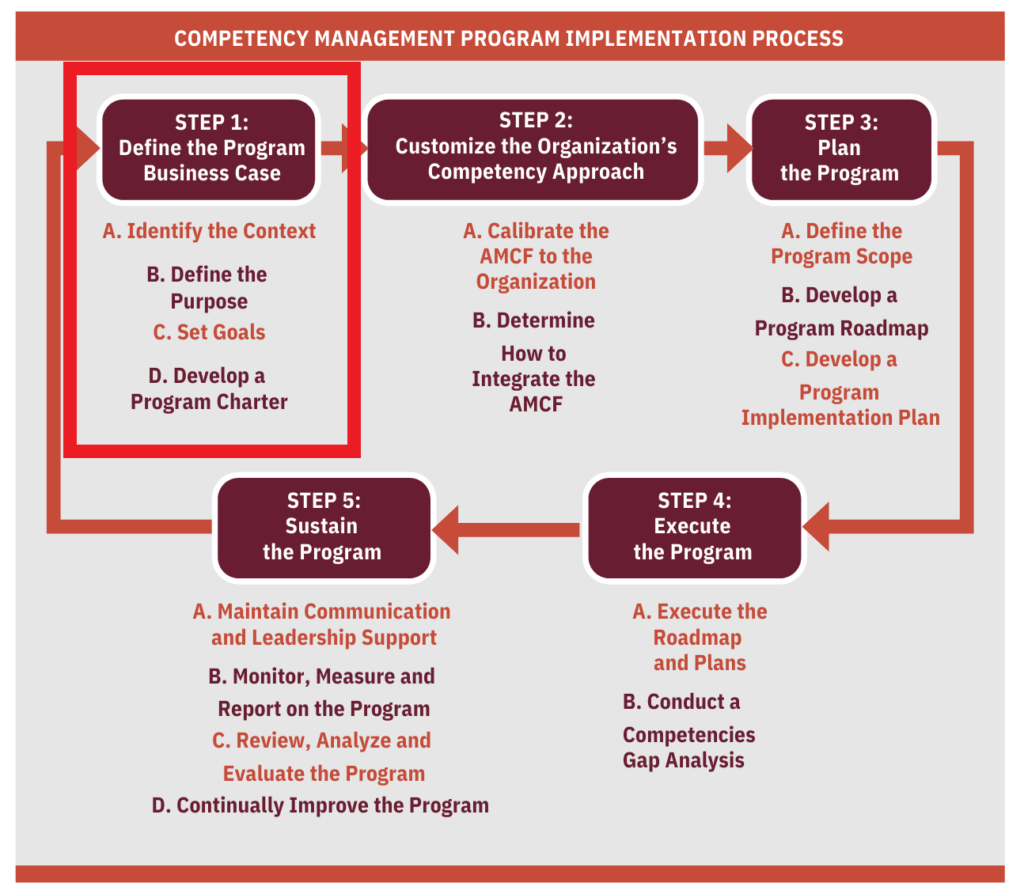
A. Identify the Context
Identify issues, concerns, and pains – Examine what problems exist in the organization right now. Many of these problems can be traced back to competency gaps that may not be obvious. Update the organization’s AM readiness assessment for potential additional insights.
Review organization’s strategic context
An organization’s vision and values set the direction and priorities of the organization. In order to progress, the organization needs to know where it is going, and the Competency Management Program can only be effective if there is clear alignment on the goals and culture that are the eventual target.
- In addition, the AM policy and strategy will be the key documents required for AM-specific competency management. The AM principles set out in the AM Policy form a starting point for how to describe the desired AM culture.
- Consider the need to adapt organizational HR and governance policies, programs, and processes to support AM culture and outcomes.
Know the organization’s strengths and weaknesses
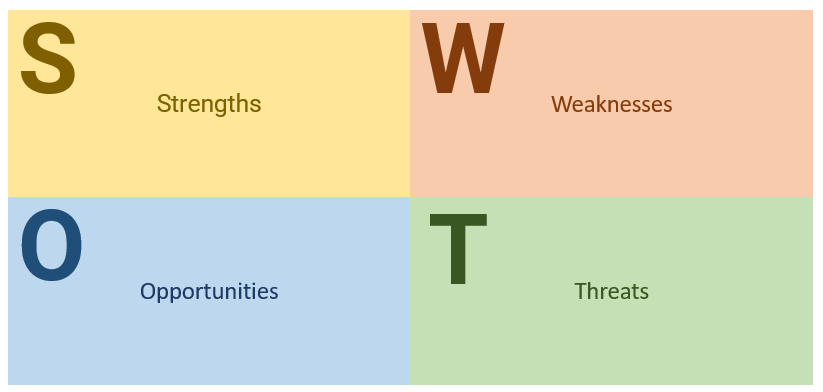
Undertake a SWOT analysis. Identify the strengths, weaknesses, opportunities, threats, constraints, and limitations of the organization. This improves understanding of what the organization is capable of doing well, what it is not capable of doing well, and why that is.
- Assess the organization’s readiness for the change associated with the Program.
- Assess which issues may be caused by, or impacted by, staff capability or capacity. Identify which strategies or objectives are undermined due to a lack of these capabilities or capacity.
B. Define the Purpose

Define the problem
Consider the issues identified earlier. Identify those that are related to competency gaps and decide which ones to tackle in the competency management program.
Define the program vision
Everything needs a purpose, including the organization’s Competency Management Program. Determine what the organization’s desired outcome is, i.e., the reason for doing the program. Or, take the problem you identified above and flip it into a positive vision.
C. Set Goals
Take the vision for the organization’s Competency Management Program and make it concrete. Define the targeted results or outcomes.
- See Competency Management Uses for some options.
- Evaluate the organization’s Competency Management Program goals for alignment with the broader organizational and AM goals. The Competency Management Program is a tool to help achieve these goals.
D. Develop a Program Charter
Gain leadership support
Secure commitment for the program, funding and resources from senior management. All organizational activities have an associated cost, and the Competency Management Program is no different. Make sure the organization’s senior management understands the need for, scope, and benefits of competency management. Visible and vocal communication of the need and value of the work is crucial to the success of the program.

Develop the program governance structure
Consider whether ownership of the program would best be placed with the HR department or with the AM team. If the organization’s HR department has not yet been involved in the process, engage them. Decide on the program’s ownership and set out its decision processes, rules, roles and authorities.
Develop a program management framework
- Develop a performance management framework and initial program key performance indicators.
- Adopt a project management and controls framework. If available, utilize the organization’s project management office resources and adopt the organization’s framework for similar programs.
- Identify initial needs and the corresponding sources of funding, resources, information and other support. If the organization includes unionized staff, consider union requirements.
- Identify initial resource needs for AMCF calibration, change management analysis and program planning.
Create the AM Competency Management Program Team
The program team should include a diverse selection of people from different departments across the organization. Ideally, representation should include senior management, HR, the AM leader, and line staff for “on-the-ground” insight.
 This step will seem overwhelming for a small organization, but it can be greatly simplified. A “team” of one does not need a lot of process. Adopt existing procedures and just keep organized. However, a successful program will need leadership support. This a critical requirement. Focus attention here.
Don’t forget to download the AMCF Implementation Worksheet to help guide you through the process.
Next go to the CUSTOMIZE step